
 Innovating quality sports products since 1884
 UK Manufacturer of Sports Equipment
 Simple Online Ordering. Buy Direct.
 130 Years of Innovation. Trusted Suppliers
Timber vs. Steel Tennis Posts: Which is Best for Your Facility?
- Admin
- Blog Posts
- 12 Apr 2026
-
37views
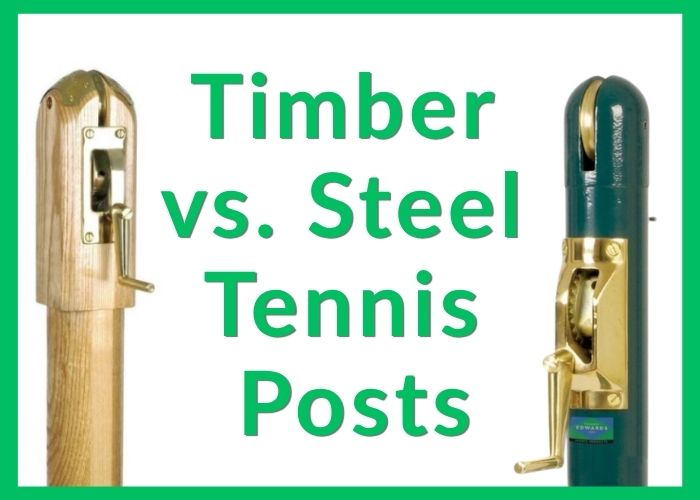
Time for an equipment upgrade? Edwards Sports can help you decide on the right materials. Choosing the right tennis posts impacts performance, maintenance, and long-term costs, so read our timber vs. steel tennis post guide to help you make the all-important decision.
Key Points: Timber vs. Steel Tennis Posts
- Steel tennis posts are best for durability and low maintenance, making them ideal for outdoor, high-use courts such as clubs, schools, and public facilities.
- Timber (ash) tennis posts offer a traditional, premium appearance, suited to private courts or heritage settings where aesthetics are a priority.
- Timber posts can have a higher upfront cost, while steel posts offer a lower upfront cost.
- Steel posts deliver more consistent performance over time, whereas timber can be affected by weathering and natural wear.
- Both options are suitable for various tennis court surfaces, but the right choice depends on usage, environment, and desired appearance.
In our handy comparison guide, we'll go through the properties, advantages, and disadvantages of both timber and steel tennis posts, so you can make the best decision for your tennis courts.
We'll also give you some extra advice on other things you should consider before purchasing a set of posts.
So, if you're ready to learn more about tennis posts, keep reading.
Properties of a Timber (Wooden) Tennis Post
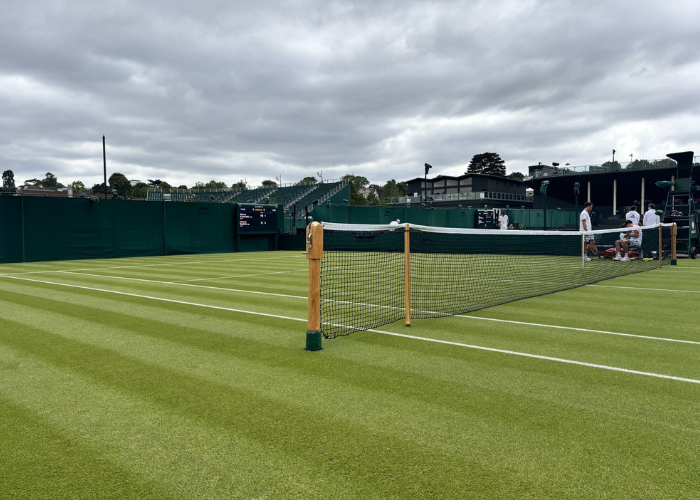
Timber or wooden tennis posts are popular among players and club owners due to their traditional look and feel. They are typically made from high-quality wood, like ash.
Discover Edwards Sports Timber Tennis Posts Here
One of the main properties of timber tennis posts is their natural flexibility. This allows them to absorb impact and reduce strain on the net during play. Here are the other properties of the popular tennis post:
- High strength-to-weight ratio: Ash is a hardwood known for its excellent structural strength without being excessively heavy.
- Durable hardwood: Resistant to wear and impact, making it suitable for repeated use.
- Traditional Wimbledon-style finish: Light brown tone with visible grain, often used where a classic aesthetic matters. The look is similar to that of a Wimbledon Centre Court.
- Pressure-treated: These posts are sometimes treated for improved resistance to moisture, rot, and weather damage.
- Socketed installation: Wooden tennis posts usually come with a socketed installation design and ground bases, meaning they can be erected semi-permanently without the risk of toppling.
- Free-standing: You can also find free-standing designs for those looking for a more temporary solution.
- Winding mechanism and pulley wheel: Tennis nets are often attached to the wooden posts using a winding mechanism and pulley wheel system, allowing for easy adjustment of net tension.
-
 Stadium Wooden Tennis Posts£1,740.00
 -
 Universal Wooden Tennis Posts£2,411.56
 -
 Square Centre Court Wooden Tennis Posts£1,740.00
 -
 Round Centre Court Wooden Tennis Posts£1,740.00
Advantages and Disadvantages of Timber Tennis Posts
| Advantages | Disadvantages |
|---|---|
| Aesthetic appeal: Ideal for clubs, schools, and private courts looking for a traditional or premium appearance synonymous with Wimbledon Centre Court-style Cost-effective in the long run: Despite their higher cost initially, wooden tennis posts are weather-resistant, allowing consistent game play season after season Shock absorption: Natural flexibility reduces stress on fixings and net tension systems Easier installation: Lighter and simpler to handle, especially for smaller facilities |
May have higher maintenance requirements: A wooden post may require regular treatment or sealing to prevent rot and weather damage, or at the very least, regular checks Shorter lifespan than steel: Even treated timber will generally not last as long as powder-coated steel Susceptible to weathering: Can warp, crack, or degrade over time when exposed to moisture and UV. It's best to keep the posts in storage when not in use, particularly when used as outdoor tennis posts Less suitable for high-use courts: Heavy-duty or public courts may benefit more from steel due to durability demands Higher initial cost: Wooden Wimbledon-style posts might cost more initially |
How to Choose a Reliable Sports Equipment Supplier for Your Facility

Properties of a Steel Tennis Post
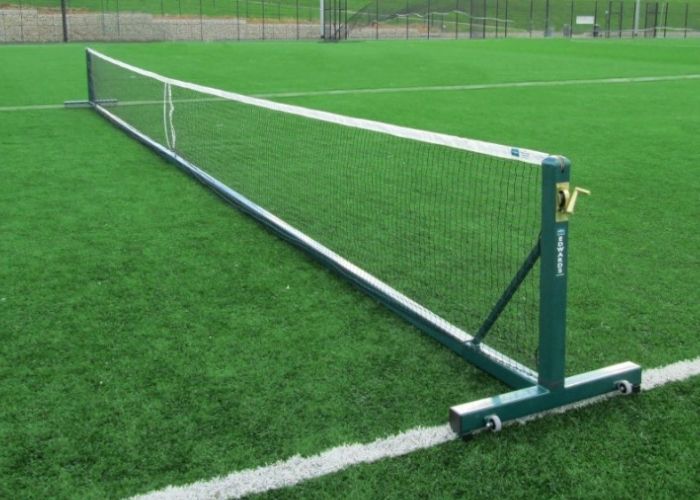
Metal tennis posts are another popular option for facilities due to their ability to withstand intense matches. Those made from thick, powder-coated steel are especially heavy-duty.
Discover Our Metal Tennis Posts Here
One of the main properties of steel tennis posts is their strength, which makes them ideal for high-use courts. Below is a list of the other properties:
- Rigid and stable: Steel tennis posts have minimal flex, which ensures reliable performance over time.
- Corrosion-resistant coatings: They are typically galvanised and/or powder-coated to protect against rust and weathering.
- Long lifespan: Designed for durability in outdoor and indoor environments, even with heavy use.
- Modern, professional finish: They are most commonly used on clubs, parks, and competition-level tennis courts.
- Socketed installation: Most steel tennis posts are designed for socketed installation with ground bases, allowing them to be installed semi-permanently without the risk of falling over.
- Free-standing: You can also find free-standing designs for those looking for a more temporary solution.
- Winding mechanism and pulley wheel: Tennis nets are often attached to the steel posts using a winding mechanism and pulley wheel system, allowing for easy adjustment of net tension.
-
 Square Steel Socketed Tennis PostsFrom: £314.16 Regular Price £369.60


Advantages and Disadvantages of Steel Tennis Posts
| Advantages | Disadvantages |
|---|---|
| Exceptional durability: Ideal for high-traffic courts, clubs, and public facilities where longevity is critical Low maintenance: No need for regular treatment or sealing, reducing long-term upkeep costs. Regular cleaning will help keep them court-ready Weather resistance: Protective coatings prevent rust and degradation on outdoor courts Consistent performance: Rigid structure ensures stable net height and tension over time Low initial cost: Steel tennis posts can often be cheaper than wooden tennis posts, but that doesn't mean they lack durability or longevity |
Heavier to install: Increased weight can make handling and installation more difficult Less aesthetic: Industrial appearance may not suit traditional or heritage court settings Potential for corrosion (if damaged): If protective coatings are chipped or worn, exposed steel can rust over time Less shock absorption: Rigid material offers little flexibility, which may place more stress on fixings |
The Final Verdict: Timber vs. Steel Tennis Posts
You should now understand a bit more about both timber and steel tennis posts. But, if you're still unsure which one to choose for your facility, club, or school, below is a comparison, highlighting the exact differences between the two.
| Factor | Timber (Ash) Tennis Posts | Steel Tennis Posts |
|---|---|---|
| Best for Indoor Use | Ideal. Adds a traditional, premium look | Ideal. Consistent performance with minimal upkeep |
| Best for Outdoor Use | Moderate. May require regular treatment and maintenance. We recommend storing these posts inside when they aren't in use | Excellent. Highly weather and corrosion-resistant |
| Upfront Cost | Higher initial investment | Lower upfront cost |
| Long-Term Cost | Higher due to maintenance and shorter lifespan | Lower due to durability and low maintenance |
| Durability | Excellent, but can degrade if left outside over long periods. Typically used as indoor tennis posts | Excellent. Built for heavy and long-term use. Typically used as outdoor tennis posts |
| Maintenance | Moderate. Requires ongoing checks | Low. Occasional inspection only |
| Weather Resistance | Moderate. May warp, rot, or crack if left outside over long periods | High. Powder-coated for protection |
| Aesthetics | Traditional, natural wood Wimbledon-style finish for professional courts | Modern, clean, professional appearance, but lack the traditional style |
| Installation | Easier. Lighter and simpler to handle | More difficult. Heavier and more labour-intensive |
| Performance Consistency | High | High |
| Best Use Case | Private courts, heritage clubs, aesthetic-led installations | Clubs, schools, public courts, high-use environments |
So, wood or metal tennis posts? We recommend opting for timber posts for aesthetics and lower-usage courts, like schools, private courts, and traditional environments.
Choose steel posts for durability, performance, and long-term value, especially for outdoor or high-use courts, such as public courts or membership-based facilities.
Shop Edwards Sports Tennis Posts Here!
What Else Do You Need to Consider When Buying a Tennis Post?
Choosing between timber and steel is important, but there are several other factors that can influence which tennis posts are right for your court.
Discover 7 Tennis Court Equipment Essentials
From installation method to compliance with regulations, these considerations can impact both performance and cost over time.
Tennis Post Fixings (Installation)
The type of fixing system used will determine how securely your posts are installed and how easy they are to maintain or replace.
- Socketed posts: Set into the ground using permanent sockets, offering maximum stability and a professional finish.
- Base plate or surface-mounted posts: Bolted onto the court surface, making them easier to install but slightly less robust.
- Free-standing posts: Allows posts to be placed in storage or removed when not in use. This is ideal for multi-sports facilities and school courts.
For most outdoor and club-level courts, socketed fixings are the preferred option due to their durability and clean appearance.
Find Socketed and Free-Standing Posts Here
Net Tensioning Mechanism
The net tensioning system is a critical component of any tennis post, directly affecting ease of use, safety, and long-term performance.
Read Our Tennis Net Buying Guide
For example, Edwards Sports posts are designed with high-quality winding systems, where the net cord is fed through the post and tightened using a winding mechanism.
Below are some of the components that make up a reliable tennis post:
- Internal winding system: The net cord runs through the post itself, creating a clean, professional finish and reducing exposed components.
- Brass winding mechanisms: Durable brass winders are designed for smooth operation and long-term reliability. This is a premium engineering feature.
- Consistent net tension: Built-in winding systems allow users to easily maintain correct net height and tautness during play.
- Pulley-assisted systems: Some posts include a pulley system to improve tensioning efficiency and reduce strain.
Below is a selection of Edwards Sports Winders, so you can secure your tennis net firmly and reliably:


Court Type Compatibility
Not all posts are suitable for every surface, so it’s important to match your setup to your court.
- Hard courts and artificial grass typically support both socketed and surface-mounted systems.
- Clay and grass courts often require more careful installation to avoid disruption and ensure stability.
- Drainage and ground conditions should also be considered for outdoor installations.
Choosing the right setup for your surface helps maintain court quality and ensures long-term performance.
Compliance and Regulations
If your court is used for competition or public access, meeting recognised standards is essential.
- Posts should comply with ITF (International Tennis Federation) guidelines.
- Net height and positioning must be accurate and consistent.
- Safety considerations are particularly important for schools and public facilities.
Ensuring compliance not only improves performance but also reduces potential safety risks.
You can find the ITF guidelines here.
Final Words: Choosing the Tennis Post that's Right for Your Facility
When it comes to choosing the right tennis posts for your facility, there are a few key factors to consider, but hopefully, you now know which post is right for you.
To recap:
- Timber (wooden) tennis posts are best suited to lower usage courts, both indoors and outdoors (as long as they aren't left outside over long periods), that prioritise a traditional aesthetic.
- Steel tennis posts are best suited to high-foot-traffic courts that require high levels of durability and long-term value.
But the bottom line is, both types of tennis posts serve as excellent tennis equipment for all kinds of tennis courts, from grass, clay, and hard courts. They each offer a professional playing experience for both casual players and pros alike.
Browse our range of steel and wooden tennis posts below. With over 100 years of engineering expertise, we're confident we have the right posts to upgrade your court.
-
Stadium Wooden Tennis Posts£1,740.00
-
Square Centre Court Wooden Tennis Posts£1,740.00
-
Round Centre Court Wooden Tennis Posts£1,740.00
Please don't hesitate to contact us if you have any questions. Happy tennis post searching!
FAQs
What Are the Disadvantages of Metal Tennis Posts?
Depending on your specific facility's needs, metal tennis posts, especially steel, are an excellent choice for your courts.
However, some of the disadvantages may include their heaviness when installing and possible corrosion when not cared for.
While they may be a little heavier than our wooden tennis posts, our steel tennis posts here at Edwards Sports are crafted from thick steel that has been powder-coated green for the ultimate protection against rust and corrosion.
Rest assured, your posts will continue to look professional season after season with the proper care and maintenance.
How Long Will a Steel Tennis Post Last in the Ground?
Our steel tennis posts are designed to stand the test of time against all weather when installed on outdoor courts.
With the proper care and maintenance, your steel tennis posts can last season after season.
For even more longevity, we recommend removing the posts and placing them in storage when not in use.
Are Steel Tennis Posts Cheaper than Wooden Tennis Posts?
Yes, generally, steel tennis posts are cheaper than wooden or timber tennis posts, but this is dependent on the supplier.
Here at Edwards Sports, our steel tennis posts are more competitive compared to our Wimbledon-style wooden posts.
What Wood Are Tennis Posts Made From?
The wooden tennis posts here at Edwards Sports are handcrafted from solid ash timber for a reliable, professional finish synonymous with the traditional Wimbledon look.
The timber is weatherproof, making it perfect for outdoor and indoor tennis posts.
Related Posts




Categories
Recent Posts





 RSS Feed