
 Innovating quality sports products since 1884
 UK Manufacturer of Sports Equipment
 Simple Online Ordering. Buy Direct.
 130 Years of Innovation. Trusted Suppliers
Multi-Use Games Area Set-Up: A Guide for Facilities and Schools
- Admin
- Blog Posts
- 7 Apr 2026
-
80views
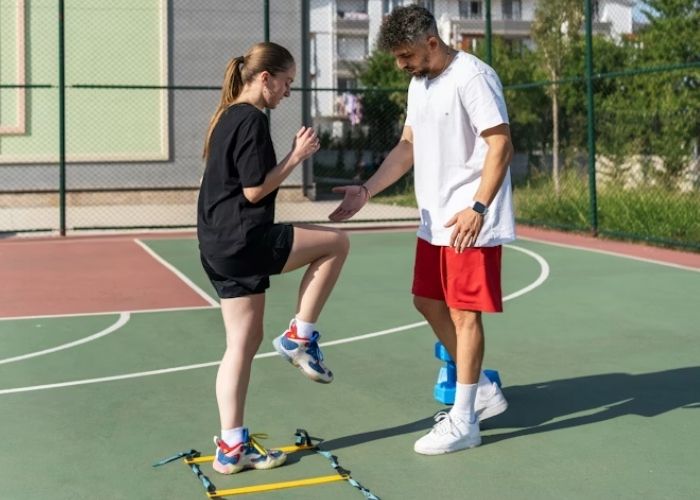
A well-designed multi-use games area can transform how schools and facilities use their space, but getting it right is essential. If you’re considering it, this guide will walk you through everything you need to know for a successful multi-use games area set-up.
Multi-Use Games Area Set-Up: A Summary
- Multi-use games area (MUGA) uses: Tennis, football, basketball, netball, hockey, fitness classes, and more.
- Cost: MUGAs can cost anywhere from £20,000 to £200,000+, depending on contractors and installers, extras (like fencing, floodlights, and equipment), and surface.
- Popular surface options: Polymeric rubber, macadam, and artificial grass, each suit different sports, budgets, and performance needs.
- Equipment needed: High-quality, modular sports equipment, like socketed or free-standing posts, ensures flexibility, safety, and long-term durability in high-use environments.
- Common mistakes during a MUGA set-up: Poor surface selection, low-quality equipment, and a lack of future-proofing to reduce long-term maintenance costs.
A MUGA is a popular sports court for all kinds of facilities, from schools to community parks, larger sports clubs, and more. They are particularly useful when space is limited.
If you want to offer a variety of sports at your venue with just one multi-use court, a MUGA will help you do just that.
Plus, they offer a safe haven when older pitches and courts are waterlogged, boggy, and chipped.
For vital information about MUGAs, including how to set one up and the best equipment, keep reading.
Edwards Sports Professional Multi-Use Games Area Equipment
Here at Edwards Sports, we’ve been engineering top-quality equipment for all kinds of sports facilities for over 140 years.
Our expertise and experience in the craft mean we can supply equipment to your MUGA that not only looks, feels, and performs premium, but also stands the test of time, which is essential for MUGAs with high footfall.
As suppliers to the likes of Wimbledon and professional tennis clubs like Tottenham Hotspur, we are the top choice for your MUGA too.
Explore and shop our sports equipment today, and see how high-quality products can transform your multi-use games area.
What is a Multi-Use Games Area (MUGA)?
A Multi-Use Games Area (MUGA or MUGA play area) is an outside sports surface, usually fenced in, designed for many different activities.
Learn How to Create an Indoor Multi-Sports Facility
They're typically made from tough materials like synthetic turf, polymeric rubber, or macadam, making them suitable for a variety of sports, from tennis to basketball.
By painting lines for different sports on one court, a MUGA makes the most of a small space. This makes it a great money-saving option for schools, leisure centres, and community parks that can't afford or have enough space for a separate court for each sport.
Getting people of all ages and abilities active and involved in sport is a primary function of a MUGA, facilitating a space for all.
What Sports Can Be Played on a MUGA?
The great thing about MUGAs is in the name — Multi-sports area.
This means that a MUGA play area can host any sport. From tennis to basketball, football, netball, hockey, and more, MUGAs, thanks to their multiple line markings, are suitable for lots of sports.
A MUGA can even be used for non-sporting activities, like fitness classes and yoga, giving facilities a dedicated space to offer a wide range of services.
What is a MUGA Best for?
MUGAs are best for facilities and communities looking to maximise their space without compromising on the variety of sports and activities available.
They offer a versatile, all-in-one solution that can cater to different age groups, skill levels, and interests.
This makes them perfect for schools, parks, community centres, and even residential areas. Below are the standard sizes of a MUGA to give you an idea of the size yours could be:
- 20m x 10m (small school)
- 30m x 15m (multi-sports facility)
- 40m x 20m (full-size multi-use facility/community park)
Multi-Use Games Area Set-up: A Step-By-Step Process
Setting up or building a MUGA can come with complications, which is why we've set out our step-by-step process below, so you can get one up and running at your facility in no time.
Of course, your specialist contractor or installer will have some recommendations for your specific facility, and you should follow their advice closely to ensure the best possible outcome.
Our step-by-step will help you create a rough plan before you reach the stage of hiring outside help.
Step 1) Define Desired Outcomes
Before starting, outline what you want to achieve with your MUGA. Consider:
- Sports/activities: What will it be used for? Decide what sports you want to offer, because the surface you choose or built-in components may differ.
- Users: Which age groups will it serve? If you’re building your MUGA for a primary school, you may want to consider a smaller space.
- Requirements: Are there specific accessibility or safety needs? This is especially important for wheelchair users and others with disabilities.
- Usage: How often will it be used? Again, this may impact the surface you choose, the size of your MUGA, or where it’s positioned.
- Standards: Does it need to meet any certifications? All structures must comply with UK safety standards and regulations.
- Budget: Do you have a strict budget you need to stick to? MUGAS can cost anywhere from £40,000-£200,000+, so it’s important to set your budget and stick to it to avoid racking up a huge bill.
You should also think about the final outcome. Do you want to encourage a certain sport, get people active, or build a space for the community to use at their leisure?
Defining these outcomes will guide your planning and ensure the MUGA is tailored to your facility's needs, while keeping the ultimate goal clear for everyone involved in the process.
Step 2) Choose the Right Location
The next stage is to have an idea of the location you'd like the MUGA to be placed.
Your contractor should guide you on site-specific requirements, but it's good to have a starting point.
Factors to consider include accessibility, safety, existing facilities nearby, and any potential land restrictions.
For example, you will almost definitely need planning permission for your MUGA, especially if it involves fencing, floodlighting, or it's a brand new site.
Once you have a general idea of where the MUGA will be located, it's important to get input from the community. This can involve community surveys or open forums for discussion.
This not only ensures that the MUGA is built in a location that is accessible and convenient for the community but also involves them in the decision-making process, which can lead to greater support and utilisation of the facility.
Step 3) Plan Logistics
When planning the logistics for your MUGA, it's important to establish a realistic timeline and budget.
Consider the following:
- Timeline: Allocate sufficient time for each project phase, including design, community engagement, and construction.
- Budget: Account for all potential expenses, such as site preparation, materials, labour, permits, and ongoing maintenance costs.
- Features: Will you need fencing, floodlighting, a sheltered area for sun and rain, storage, or other specific equipment? These will impact your budget and timeline.
- Suppliers: Identify reliable contractors and suppliers early on to avoid delays.
- Communication: Keep all stakeholders aligned and informed throughout the project.
Step 4) Plan Surface and Line Markings
The next stage is to plan what surface you want to use. The material you use must:
- Withstand high foot traffic
- Provide grip and resistance
- Offer clear line markings for various sports
- Be well-draining for play in all weather
- Be highly durable
- Blend in with the surrounding environment
- Require low maintenance
Below are some popular materials used for MUGA surfaces, their benefits, disadvantages, cost, and what they're best suited for.
| Surface Type | Typical Cost (UK) | Advantages | Disadvantages | Best Suited For |
|---|---|---|---|---|
| Polymeric Rubber | £70-£110 per m² |
|
|
|
| Macadam (Tarmac) | £40-£70 per m² |
|
|
|
| Artificial Grass (2G/3G) | £80-£140 per m² |
|
|
|
You also need to think about the markings you'd like on the MUGA. They need to be durable, clear and obvious, and different colours for different sports for clarity.
Some of the most popular markings for these areas include football, tennis, basketball, hockey, and netball.
You can find information on some of these markings over on our blog!
Browse Our Blog for Court Marking Information
Step 5) Consider Safety and Accessibility
Your chosen contractor must ensure the MUGA meets UK safety standards and is fully accessible.
Key compliance standards for MUGAs include:
- EN 14877: Specifies performance requirements for synthetic outdoor sports surfaces.
- EN 1177: Applies to impact absorption where MUGAs are near play areas.
- Sport England guidance: Provides sport-specific requirements for design, layout, and surfacing.
Hiring a specialist contractor ensures that all components adhere to these critical benchmarks.
The Best Sports Equipment for a MUGA Play Area
Here at Edwards Sports, we've been crafting top-quality sports equipment for high-profile venues, schools, and facilities for over 140 years, so we know a thing or two about what you'll need for your new MUGA.
Once your court has been built, you need to think about the sports you're offering and what equipment is best suited to your facility.
For a MUGA, it’s essential that the equipment is up to scratch. With the high usage synonymous with a MUGA, it’s likely you’ll see fast wear, increasing safety risks.
With high-quality equipment instead of cheap alternatives that can fail quickly, your equipment can last for years without having to spend money on unnecessary repairs and replacements.
Read More on How to Choose a Reliable Equipment Supplier
Below is some sports equipment you may want to consider.
Tennis Equipment
Of course, if you want to include tennis in your MUGA, you'll need tennis posts and nets.
For most MUGAs, socketed or freestanding posts are essential. Permanently fixed systems reduce flexibility and limit multi-sport use. After all, you can't play football with a tennis net in the middle of the pitch!
Socketed posts can be removed from their ground sockets when not in use and covered with a cap, ensuring the surface is flush and free of trip hazards. These are excellent for facilities that see intense, regular tennis play.
-
 Round Centre Court Wooden Tennis Posts£1,740.00
 -
 Square Steel Socketed Tennis PostsFrom: £314.16 Regular Price £369.60


Free-standing posts might be better for venues with a less frequent tennis schedule. These posts can be wheeled on and off the court as needed, making match setup quick and easy.

You'll also need to choose the right nets for your posts. We offer a huge range of nets suitable for different venues and facilities.
Read our tennis net buying guide here, or explore some of our most popular options below.


Football Equipment
Most multi-use games areas feature football goals, often as part of a combination unit with a basketball hoop. If yours doesn't, you'll need to source football goal posts and nets separately to offer the popular sport.
We're proud to be a premium supplier, having equipped top facilities like Arsenal, Liverpool, and Rangers with our football gear.
We offer a complete range of long-term durability options to suit any age or ability, from youth goals and mini soccer goals to UEFA regulation box nets and continental nets.
Browse some of our most popular products below, or visit our dedicated football equipment page to see the full collection.
-
 Striped senior size football netsFrom: £171.49
 -
 Self Weighted Aluminium Football Goals - 80mm ODFrom: £1,821.53
 -
 Bespoke Goal Net£POA

Basketball Equipment
Many MUGAs feature built-in basketball hoops, but these don’t often include a net.
Below, you'll find our heavy-duty, tournament-ready basketball nets, which are perfect for any outdoor MUGA. With a brightening treatment for better visibility, they're ready for every slam dunk!

If your MUGA doesn't have a built-in hoop, you'll also find post protectors for your free-standing posts in our basketball section. These are essential for player safety.

Explore our top-quality basketball equipment here.
Netball Equipment
Netball is another popular sport for MUGAs. While many have built-in hoops, like basketball hoops, they usually don't include a net.
At Edwards Sports, we offer a wide range of netball nets used in both schools and professional facilities for your posts, from professional white braided nets to coloured options for contrast.
If your MUGA doesn't have built-in posts, we also supply a selection of wheel-away and socketed posts. Manufactured from robust steel or lightweight aluminium, our posts are built to last for years with proper maintenance.
Explore our netball equipment below, or browse the full range on our website.


Hockey Equipment
Last but not least, hockey is another popular sport for MUGAs.
You can use existing built-in football goals for a casual game if you have them, but dedicated hockey goals are essential if the sport is a primary focus at your facility.
At Edwards Sports, we supply everything you need for a professional hockey setup, from self-weighted goals to championship-style nets, all built for long-term durability compared with budget alternatives.
Trusted by top clubs across the UK, our equipment is the final piece to complete your MUGA.
Explore some of our hockey equipment below, or view the full range on our website.
-
 Self Weighted Hockey Goal£3,660.86
 -
 Championship Hockey Nets (Pair)£237.23
 -
 3mm Green Hockey Nets (Pair)£194.36
 -
 2mm Black Hockey Nets (Pair)£135.90
How to Future-Proof Your MUGA Equipment
Investing in the right equipment from the outset is key to avoiding ongoing repair and replacement costs.
A well-designed MUGA should be built for years of consistent use, not short-term fixes.
To future-proof your setup, prioritise:
- High-quality, heavy-duty materials that withstand frequent use and UK weather conditions.
- Socketed and modular systems that allow equipment to be removed, replaced or adapted as needs change.
- Reliable net tensioning systems to maintain performance without constant adjustment.
Lower-cost equipment can quickly become a false economy, often requiring frequent maintenance or early replacement, particularly in schools and public facilities with high footfall.
Edwards Sports specialises in durable, professional-grade posts, nets and goal systems designed specifically for multi-use environments.
By choosing proven, long-lasting equipment from the start, you reduce downtime, minimise maintenance, and ensure your MUGA continues to perform for years to come.
Browse our website to find equipment for the sports you want to offer on your MUGA. Rest assured, we'll supply you with high-quality equipment that lasts years, not months.
Common Mistakes to Avoid When Setting Up a MUGA
Even well-funded projects can fall short if key decisions are rushed or overlooked. Avoiding these common mistakes will save time, budget, and long-term maintenance headaches:
- Choosing the wrong surface for your sport mix: This leads to poor performance and limited usability.
- Choosing low-quality equipment: Low-quality posts, nets, or goals wear out quickly in high-use environments, making ongoing maintenance and replacement fees high.
- Ignoring drainage and ground preparation: This causes surface damage and costly repairs.
- Poor layout and line marking design: This results in confusing, impractical multi-sport use. Lines should be clearly colour-coded and visible despite heavy usage.
- Overlooking fencing and access points: Fences and access points impact safety, security, and ball retention. Take advice from your contractor/installer for the best results.
- Not planning for lighting early on: Retrofitting later can be expensive and disruptive. It's best to think of the logistics at the beginning.
- Failure to future-proof the setup: This can limit flexibility as usage needs change.
- Focusing on upfront costs over long-term value: This often leads to higher lifetime costs. Sometimes, the more you spend upfront, the less you have to spend in the long-term.
- Ignoring maintenance: It’s important to incorporate surface cleaning, line remarking, and regular equipment checks to keep your MUGA safe and looking smart.
Getting these fundamentals right from the start ensures your MUGA is safe, durable, and fit for purpose.
Learn How to Reduce Maintenance Costs Here
Conclusion: Creating a Multi-Sports Area for the Surrounding Community
You should now have a better idea of how you'll set up your MUGA. With the help of a professional contractor or installer, your new court is set to be a success.
MUGAs are fantastic all-in-one hubs for the community, school students, and leisure centre goers, giving everyone a chance to have a go at a new sport.
A successful multi-use games area setup comes down to getting the fundamentals right, from surface and layout to high-quality, durable equipment.
By taking a considered, long-term approach, you can create a space that performs reliably, supports multiple sports, and delivers real value over time.
By working with an experienced equipment supplier like Edwards Sports, you can ensure your MUGA is equipped with performance, durability, and flexibility in mind, helping you avoid costly repairs and replacements.
Explore and shop our professional equipment today, and kit out your MUGA with long-lasting, professional products!
FAQs
How Much Does a Multi-Sports Area Cost?
In the UK, most MUGA pitches, depending on installation, surface, size, fencing, and many other extras, can cost anywhere from £40,000 to £200,000+.
For a more accurate price, we recommend contacting suppliers and installers so you can get a fully built-out quote.
How Long Does a MUGA Last?
Depending on the type of surface you choose, a MUGA can last 8-20 years, especially if you keep up with maintenance.
For example, a polymeric rubber court will likely last 15-20 years, whereas synthetic grass will likely last 8-12 years, according to As Good As Grass.
This means a MUGA, despite its high initial cost, can be a worthwhile investment for any facility or school.
What is the Best Surface for a MUGA?
There are many surfaces that can be used for MUGAs, such as polymeric rubber, artificial grass, and tarmac.
The best surface for your MUGA will depend on the type of sports that will be played and the budget you have available.
For example, a polymeric surface is best for impact on joints and anti-slip games of tennis and netball, but it can be costly.
Read more on surfaces in the blog post above.
Do You Need Lighting for a MUGA?
Lighting solutions, like floodlights, may be necessary for your MUGA if it's used during the evening or early mornings, where natural light is low.
However, if the MUGA is at a school, it may not be necessary, especially if it's only used during school hours.
Related Posts
Categories
Recent Posts



 RSS Feed