
 Innovating quality sports products since 1884
 UK Manufacturer of Sports Equipment
 Simple Online Ordering. Buy Direct.
 130 Years of Innovation. Trusted Suppliers
How Much Does It Cost to Build a Padel Court in the UK?
- Admin
- Blog Posts
- 23 Apr 2024
-
435views
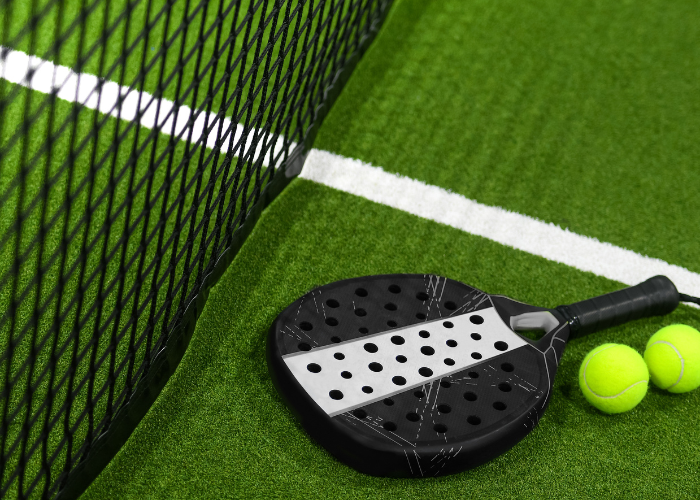
Padel is the sport on everyone's radar right now, and if you think it's time to introduce it at your facility, you've probably got questions. So, how much does it cost to build a padel court in the UK? Let's find out.
Whether you're improving the facilities at your school, ready to introduce something new and exciting to your leisure centre, or simply want to practice in your own garden, our guide will take you through the process of building your new court.
Construction steps, funding, and maintenance, this article covers it all so you can get the full picture before embarking on your project.
Padel Tennis Court Construction: A Summary
- Average cost: Between £35,000 and £55,000 for a standard outdoor double court, rising to £90,000+ for an indoor covered court.
- Key factors: Court type, ground conditions, materials, lighting, and planning permission have the biggest impact on final costs.
- Build time: Can be anywhere between 3 and 10 weeks, depending on the size of the project.
- Standards: If courts are being used in formal competitions, they must meet LTA and FIP specifications, including 20×10 m dimensions, tempered glass walls, and professional-grade surfacing.
- Funding options: Support may be available via LTA loans, Sport England grants, and local council schemes to help with installation costs.
How Much to Build a Padel Court in the UK?
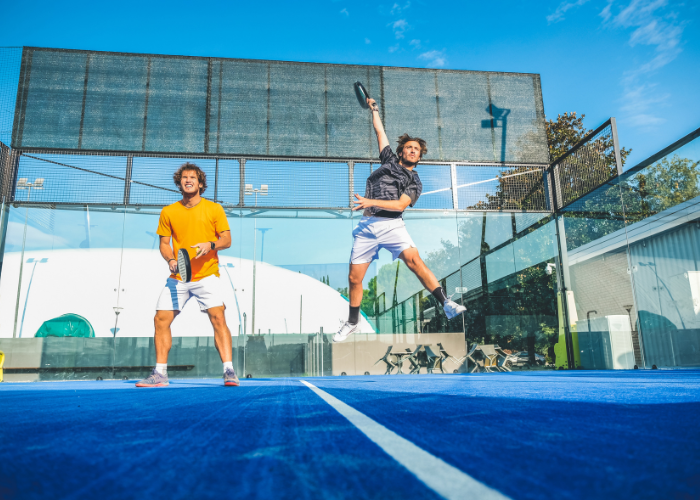
According to the Padel Court Construction Guidance Note from the LTA, the cost of building a padel court varies.
The table below is taken from the Note.
Please be aware that this table should only be used as guidance. There will be a lot of factors that affect the final cost, which we'll discuss later.
| Number of Courts | 1 | 2 | 3 | 4 |
|---|---|---|---|---|
| Courts with Lights | £36,000 | £70,000 | £100,000 | £128,000 |
| Ring Beam, Court Base, Ducting, and Drainage | £35,000 | £78,000 | £110,000 | £140,000 |
| Total | £71,000 | £148,000 | £210,000 | £268,000 |
Source: Padel Court Construction Guidance Note page 3
Padel courts in the UK are often covered to make them playable in the unpredictable British weather and to protect the court from damage and debris.
Below is some guidance set out by the LTA on how much covering your court might cost.
| Number of Courts | 1 | 2 | 3 | 4 |
|---|---|---|---|---|
| Canopy Foundation and Drainage | £20,000 | £30,000 | £43,000 | £56,000 |
| Canopy (including 3m rain screen) | £75,000 | £140,000 | £205,000 | £260,000 |
| Total | £95,000 | £170,000 | £248,000 | £316,000 |
Source: Padel Court Construction Guidance Note page 7
Overall, the cost of a padel court installation is not inexpensive, and it will require a hefty budget. However, due to the surge in popularity of the sport, your users are likely to make up for it.
The LTA says padel is one of the fastest-growing sports in the UK, with over 4000,000 people picking up a padel at least once in 2024.
In 2023, that number was a measly 129,000. The more people interested in the sport, the more demand there'll be — you can be the next go-to venue for all things padel if you act now.
Factors That Can Affect the Cost
As we said before, there are many factors that can affect the final cost of a padel court installation.
Here is a list of things you'll need to think about before embarking on your project:
- Type of padel court: Indoor courts can be more expensive than outdoor courts, because you need to factor in ventilation and roofing.
- Ground conditions and site prep: Costs will be higher if you're working on tough ground that needs levelling, draining, or foundation reinforcement.
- Type of surface: Will you choose artificial turf, concrete, rubber, or something different? Each has its own costs.
- Surround structure: According to the LTA, all padel courts require rebound ends, and you'll have to choose between glass, steel, and different mesh fencing.
- Lighting and electrical work: If you plan to have the court open during hours of darkness, court lighting is essential and another cost to consider.
- Installation and labour: Costs vary depending on your venue's location and the contractor you choose. We recommend shopping around for quotes to get the best price.
- Permits and planning: In the UK, you need planning permission for your padel court, and you may need to pay application fees and have surveys completed.
- Lawn Tennis Association recommendation: The LTA suggests that venues install a gate access system so that access can be remotely controlled. You'll need to factor this into your budget.
- Optional add-ons: Lastly, if you're a professional venue, you may want to consider seating, branding, scoreboards, and shelters, which will increase the final cost.
The Stages of Padel Tennis Court Construction
We've broken down the process of building bespoke padel tennis courts into the main steps.
Please note that depending on where you're planning to build your court, there might be different steps involved.
This is a basic guide, and we recommend contacting padel court installation specialists for more personalised information.
Stages 1) Design & Planning
Designing a padel tennis court begins with choosing the location and size. To comply with the LTA and International Padel Federation (IPF) guidelines, the padel tennis court size is typically 20 x 10m.
Read More About Correct Padel Court Dimensions
You then need to consider the orientation to minimise sun glare for players. If you're limited on locations, don't worry too much about this, especially if you plan to cover the court.
The design phase also involves selecting materials for the playing surface and rebound walls, all of which should meet the standards for competitive game play. The LTA's Guidance Note provides more details.
In the UK, planning permission may be required to construct a padel court, especially if it's intended for public use or is a significant development.
You have to submit a planning application to your local council, outlining the project details.
The application will be assessed against various criteria, including community benefit, environmental impact, and adherence to local planning policies.
You should consult your local planning authority early in the planning process to understand the requirements and ensure a smoother process.
Stage 2) Consider the Environment
When constructing a padel court, it's crucial to consider the environmental impact and integrate sustainable practices, especially if your project is located on greenfield land.
Below are key environmental considerations:
- Location: Choose a site with minimal environmental disruption. Avoid areas with high biodiversity or ecological sensitivity.
- Materials: Opt for eco-friendly materials that are durable, recyclable, and sourced sustainably. For instance, using recycled glass for walls and eco-friendly resins for surfaces can significantly reduce the environmental footprint.
- Energy efficiency: Implement energy-efficient lighting and water systems. LED lighting for the court not only consumes less energy, but also minimises light pollution.
- Water management: Design an effective drainage system that mitigates flooding and avoids waterlogging. Consider installing systems to collect and reuse rainwater to maintain the court or landscaping needs.
- Landscaping: Utilise native plants in landscaping to support local wildlife and reduce water usage. Incorporating green spaces around the court can enhance biodiversity and provide natural cooling effects.
- Waste reduction: Manage waste responsibly during construction by recycling materials and minimising construction waste. Establish on-site practices to reduce, reuse, and recycle waste.
By addressing these environmental considerations, builders can ensure that the construction of a padel court not only meets the players' needs but also respects and preserves the natural environment.
Stage 3) Ground Prep
The groundwork for a padel court is a critical phase that lays the foundation for a durable and stable playing surface. This step involves several key stages:
- Site clearance: Remove vegetation, debris, and obstacles to create a clean and level area.
- Excavation (if necessary): Dig to achieve a level base or install drainage systems. Depth varies depending on location and soil.
- Levelling and compaction: Level the ground with gravel or sand layers, then compact them to create a stable base.
- Drainage installation: Install a system around the perimeter and potentially beneath the court surface to direct water away.
- Concrete or asphalt slab construction: Pour a smooth, level concrete or asphalt slab to serve as the base for the court surface.
Each of these steps must be carefully executed to guarantee the court's quality and prevent usage issues.
A solid foundation through careful ground preparation is essential for building a padel court that will be enjoyed for many years.
Stage 4) Installing Drainage
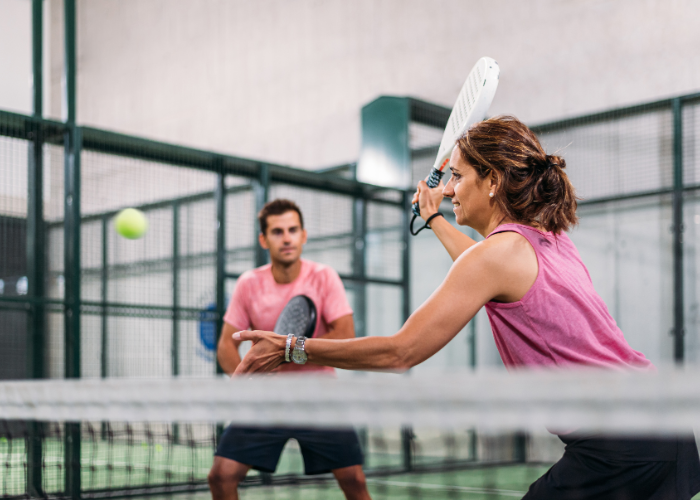
Adequate drainage is essential for a padel court to ensure it remains playable regardless of weather conditions.
Properly installed drainage prevents water accumulation on the surface, which can cause slipping hazards and damage the court materials over time.
Stage 5) Building the Sub Base & Base
The sub-base and base of a padel court are fundamental layers that support the surface material. The sub-base, typically composed of gravel or crushed stone, ensures proper drainage and stability.
The base, often made of asphalt or concrete, provides a firm, flat foundation for the court's surface.
Stage 6) Building the Enclosure & Rebound Walls
The construction of the surrounding enclosure and rebound walls for a padel court must adhere to standards. You can find more information in this LTA guidance note, which also complies with IPF requirements.
Enclosures typically have glass walls and metal mesh, extending to a height of 4 metres to effectively contain play.
It's essential that these elements are professionally installed for player safety and optimal playing conditions.
Stage 7) Installing the Court Surface
Choosing the right surface for a padel court is critical for optimal playability and durability.
Considerations include:
- Type of material
- Pile height for artificial turf
- Maintenance requirements
Surface selection affects ball speed and player comfort, impacting the game's dynamics.
The surface material should also be UV-resistant and capable of withstanding heavy use and varying weather conditions to maintain its quality and appearance over time.
Stage 8) Installing Equipment
The final step in constructing a padel court involves the installation of the equipment, which plays a pivotal role in ensuring a fully functional and enjoyable playing environment. Key components include:
- Lighting solutions: Adequate lighting is essential for evening and nighttime play. LED lighting systems are recommended for their energy efficiency, durability, and ability to provide consistent, bright light that minimises shadows and glare on the court.
Lights should be strategically placed around the court to ensure even illumination across the entire playing surface.
It should be made of durable, weather-resistant material with proper tension to maintain its position and form during play. The posts should have the same qualities, while being sturdy enough for intense gameplay.
- Maintenance equipment: To keep the court in prime condition, a range of maintenance equipment is necessary. This includes brushes or machines for surface cleaning and grooming, especially for artificial turf, and tools for net and fencing repairs.
Here at Edwards Sports, we stock a range of padel court equipment!
Our 3.5mm Polyester Headband Padel Tennis Net features quad stitching for a professional and long-lasting netting option.
If you're going to leave your nets outside for extended periods, our 3.5mm Vinyl Headband Padel Tennis Net is our top recommendation. The quad-stitched vinyl headband is highly weather-resistant and wipes clean for easy maintenance.
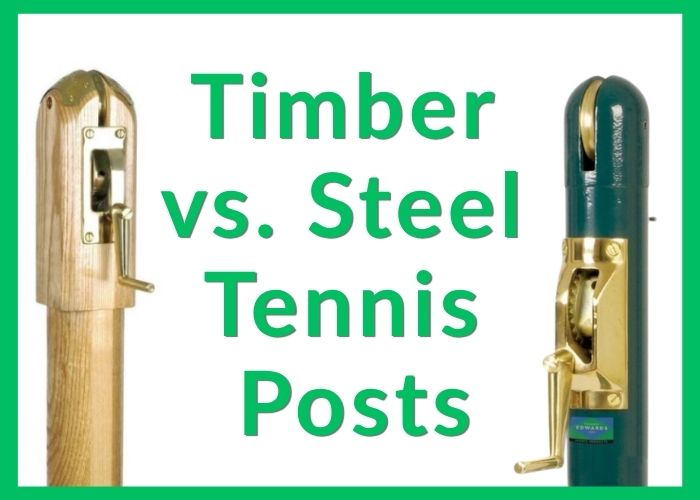
Complete your professional padel court with our Square Steel Padel Tennis Posts. The brass details and dark green paint create a professional look for your courts.


Is There Funding Available for Padel Tennis Court Construction?
Actually, yes, there is. There are many funding schemes and grants available to those wanting to introduce padel at their school or facility.
The LTA offers a Quick Access Loan Scheme. Their mission is to keep padel growing and make it accessible, enjoyable, and welcoming for all.
There are terms and conditions to their loan, so head to their website to find out if you are eligible for the funding.
Sport England and the National Lottery may also offer various grants and funding, so be sure to research all possible avenues before applying.
Oh, and don't forget about your local council. They may be able to put you in the right direction or offer funding themselves.
Are There Maintenance Costs for a Padel Tennis Court?
Like all sports courts, you will have to deal with maintenance costs when everything is up and running.
The maintenance cost will differ from court to court, as usage will be different. The higher the usage, the more maintenance is required.
Read More: How to Reduce Sports Maintenance Costs
The LTA suggest creating a sinking fund of £1,500 per year to cover court surface, lamp, and column replacement. They also suggest adding to this for other maintenance jobs needed as and when.
Here is a list of regular maintenance tasks recommended by the LTA:
Surface Maintenance (Weekly)
- Cleaning: Removing debris, leaves, and dirt from the court.
- Water drainage: Monitor the drainage system.
- Artificial turf care: Regularly brush.
- Damage inspection: Check for any wear and tear.
Glass Panel & Metal Structure Maintenance (Weekly)
- Glass panels: Inspect for chips or cracks, and clean to remove water marks.
- Metal structure: Check for rust or corrosion, especially near joints.
- Net and posts: Make sure all equipment is in good condition, properly fixed and tensioned.
Bolt & Fastener Checks (Every 6-12 Months)
- Inspection: Inspect bolts, screws, and fasteners securing the metal frame and glass panels.
- Tightening: Use the appropriate tightening tools to prevent further movement and potential hazards.
- Replacement: Replace anything worn or corroded.
Seasonal Maintenance
- Weather protection: In harsh weather, ensure all structures are reinforced to prevent damage.
- Winter protection: Carefully remove snow and ice to protect the surface and glass structure.
Record Keeping
- Maintain a log of all maintenance activities, documenting when something is replaced, fixed, or cleaned.
- Inform your contractor as soon as possible of any damages they may need to fix on the court.
Conclusion: Beginning Your Padel Court Project
As you can see, building your padel court requires significant thought and investment, but the global enthusiasm for sport makes it worth it.
By following our outlined steps, you can ensure compliance with international standards, making gameplay professional and correct.
Whether you're building a court at your facility, school, or even your own back garden, we hope we've given you everything you need for a successful construction.
Padel is the sport everyone is talking about, so get in on the buzz and offer it at your facility as soon as possible!
When you're on the lookout for brand-new padel nets and posts, remember Edwards Sports. Our professional, durable, reliable equipment will be the perfect finishing touch on your new courts!
FAQs
Are Padel Courts Profitable?
According to the LTA, padel is one of the fastest-growing sports in the UK, with just over 400,000 adults and juniors playing at least once in 2024. That's up from 129,000 at the end of 2023.
This means that padel courts are proving to be highly profitable in today's society, with more and more people wanting to take part in the sport and the multiple revenue opportunities — court rental, facility membership, coaching, and equipment rentals.
How Much Does It Cost to Cover a Padel Court?
Covering a padel court can be more expensive because of the added building materials, labour, and extras like insulation.
However, this higher initial cost will lower the cost in the long run by making the court playable in all weathers, protecting it from water damage, and reducing court maintenance.
The blog post above provides a breakdown and examples of costs, so you can get a better idea of the numbers.
Do I Need Planning Permission to Build a Padel Court?
Yes, you will need formal planning permission from your local authority to build a padel court.
This document by the LTA outlines how to do this and the considerations you will need to make.
How Long Does It Take to Build a Padel Court?
There isn't one set time a padel court takes to make; it varies from project to project.
Factors like site conditions, court type, planning permission, and supplier lead times will all affect the completion date.
An estimated time would be anywhere between 3 and 10 weeks, but your project or site manager will be able to give you a more exact timeline once work is underway.
Related Posts

Categories
Recent Posts

 RSS Feed