
 Innovating quality sports products since 1884
 UK Manufacturer of Sports Equipment
 Simple Online Ordering. Buy Direct.
 130 Years of Innovation. Trusted Suppliers
Free-Standing Vs. Socketed Goals: Which is Best For Your Football Club?
- Admin
- Blog Posts
- 30 Jun 2026
-
16views
If you're looking for a new football goal, but you're not sure which one to choose, this free-standing vs socketed goals guide explains the key differences, benefits, and drawbacks of each option.
Choosing the right football goal posts for your club is essential to the playability, safety, and convenience of your facility.
Whether you're looking for a local park, a professional football club, or a school football goal, we'll tell you everything you need to know about both kinds of goal posts, so you can make an informed decision. We'll even give you some recommendations.
So, which will it be, free-standing or socketed? Keep reading to learn more.
Free-Standing Vs. Socketed Goals: The Key Facts
- Free-standing football goals are ideal for schools, training grounds, and multi-use sports facilities because they can be moved, stored, and repositioned as required.
- Socketed football goals provide greater stability and a professional appearance, making them the preferred choice for permanent football pitches and regular match play.
- The biggest difference between free-standing and socketed goals is flexibility versus permanence. Free-standing goals prioritise portability, while socketed goals prioritise stability.
- When choosing between free-standing and socketed goals, consider your pitch surface, available storage, future facility plans, installation requirements, and how frequently the goals will need to be moved.
- Both goal types are safe and durable when correctly installed and maintained, so the best choice depends on your facility's long-term needs, rather than simply the initial purchase price.
What Are Free-standing Football Goals?
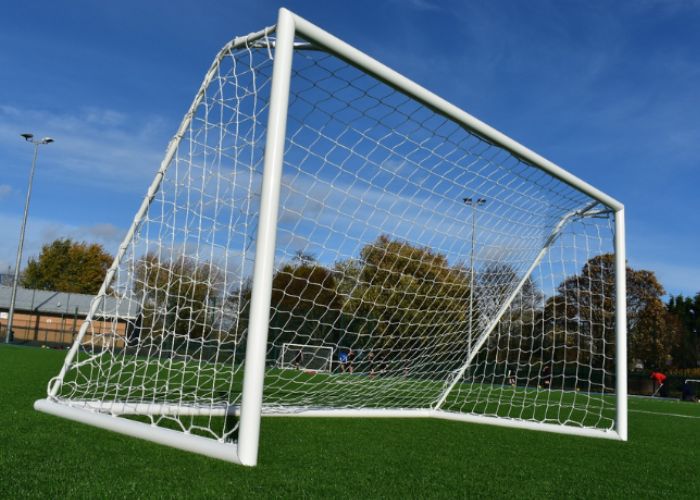
Free-standing football goals are goal posts that are not fixed to the ground, and instead, rely on their own weight, stability, and anchoring to remain upright during play.
Discover Edwards Sports Free-Standing Football Goal Posts Here
These types of goal posts are typically made from aluminium, a lightweight yet strong metal, which makes them easy to move around when needed.
This makes free-standing goals excellent for multi-sports facilities and schools, where pitches will be used for various sports where football goal posts aren't required.
They usually come with a weighted base or anchors that can be filled with sand or water to provide additional stability.
You can find our selection of free-standing football goal posts below. Contact us if you'd like help choosing the best for your facility.
Learn How to Choose a Reliable Sports Equipment Supplier
-
 Aluminium Football Goals, Self-weighted - 100mm ODFrom: £2,607.05
 -
 Self Weighted Aluminium Football Goals - 80mm ODFrom: £1,821.53
 -
 Elliptical Aluminium Freestanding Football GoalsFrom: £2,052.00
 -
 Aluminium Football Goals, Freestanding - 80mm ODFrom: £1,542.00
Properties of Free-standing Football Goal Posts
Below are the stand-out properties of free-standing football goal posts:
- Usually, aluminium framework: Durable, lightweight and rust-resistant.
- Optional wheels for portability: Makes it easy to move the goal posts around when needed.
- Safe anchoring: Free-standing goal posts usually have either weighted bars, anchor pegs, or an extended frame design to keep them from toppling during a match.
- Compatible football goal netting: Netting is essential to complete a goal. There are various styles, shapes, and thicknesses of netting types available; they just need to fit your goal posts. Find our selection of goal netting here.
- Net supports: Built-in supports that keep the net in place and prevent it from sagging or tangling during play.
- Various shapes & sizes: Different levels of play and age groups have different goals, which is why you'll find free-standing posts in a range of sizes. You'll also find them in various shapes, like elliptical and round, for clubs with a preference.
Find Our Range of Professional Football Pitch Equipment Here
Pros and Cons of Free-standing Football Goal Posts
To help you understand a bit more about free-standing football goal posts, below is a handy list of pros and cons:
| Pros of Free-Standing Football Goals | Cons of Free-Standing Football Goals |
| Portable and easy to reposition. Ideal for clubs, schools, and facilities that regularly change pitch layouts or run multiple formats of football. | Require anchoring or counterweights. Unlike socketed goals, free-standing goals must be properly secured to prevent tipping. |
| Suitable for multi-use facilities. Goals can be moved when pitches are needed for other sports or events. | Can be less stable than socketed goals if not installed or weighted correctly. |
| No ground sockets required. Avoids permanent installation work and associated costs. | May require more ongoing safety checks to ensure wheels, anchors, and weights remain secure. |
| Can be stored when not in use, helping to protect equipment and extend its lifespan. | Larger models can be difficult to move without wheels or roller systems and may require multiple people. |
| Useful on artificial surfaces where installing sockets may not be practical. | Storage space is required when goals are moved off the pitch. |
| Flexible for training and small-sided games, as they can be positioned wherever needed. | Can interfere with pitch aesthetics if regularly moved and not returned to the correct position. |
What Are Socketed Football Goals?
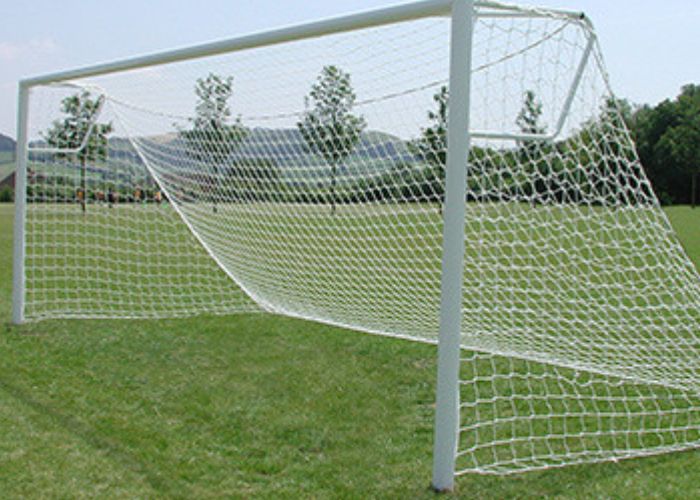
Socketed football goals are a type of goal post that is securely fixed into the ground using, if the name didn't give it away, sockets.
Browse Our Range of Socketed Football Goal Posts Here
These goals are commonly used in professional football matches and training, as well as recreational games on various surfaces.
Unlike portable or free-standing football goals, socketed goals require a more permanent installation process. This typically involves digging holes in the ground and installing ground sockets so the posts can be securely inserted and removed when needed.
Usually made from strong, sturdy, and reliable materials, like steel or aluminium, socketed goal posts are more commonly used outside in areas where football permanently takes place.
Find a selection of our socketed football goal posts below. If you need help choosing the best one for you, don't hesitate to contact us!


Properties of Socketed Football Goal Posts
Below are the stand-out properties of socketed football goal posts:
- Usually aluminium or steel framework: Aluminium is a lightweight, highly robust material, and steel is a heavy-duty, thick metal, making both ideal for socketed football goals.
- Safe anchoring: Socketed posts are just that, socketed. Secured into the pitch with ground sockets, these fixings ensure posts won't budge.
- Socket caps: Available to use when posts are removed from their sockets, preventing debris buildup.
- Drainage holes: To prevent water from pooling inside the sockets.
- Base plates: To reinforce the goal posts' strength and stability.
- Compatible football goal netting: To complete your goal, you'll need a net. We offer a wide range of netting styles, shapes, and thicknesses designed to fit your specific goal posts. Explore our selection of football goal netting here.
- Net supports: Built-in supports that keep the net in place and prevent it from sagging or tangling during play.
- Various shapes & sizes: Different play levels and age groups require different goals, so we offer a range of sizes. You'll also find them in various shapes, like elliptical and round, to suit your club's preference.
Discover Our Football Goal Netting for a Complete Set-Up Here
Pros and Cons of Socketed Football Goal Posts
To help you understand a bit more about socketed football goal posts, below is a handy list of pros and cons:
| Pros of Socketed Football Goals | Cons of Socketed Football Goals |
| Excellent stability. Fixed into ground sockets, making them a secure option for regular match play. | Less flexible. They cannot be moved easily once installed. |
| Professional appearance. Gives pitches a permanent, clean, match-ready look. | Require installation work. Ground sockets need to be accurately positioned and installed. |
| Ideal for dedicated football pitches. Best suited to clubs and facilities with fixed pitch layouts. | Not suitable for changing pitch layouts. Limits use for multi-sport or multi-format spaces. |
| Reduced need for anchoring systems. They do not usually require separate weights or anchors like free-standing goals. | Higher upfront setup effort. Installation may involve groundworks, marking, and careful alignment. |
| Consistent positioning. Goals stay in the correct place, which helps maintain pitch accuracy. | Sockets may need covers, cleaning, and checks to prevent damage or debris build-up. |
| Good long-term option. Suitable for facilities that want a reliable, season-after-season setup. | Can be impractical on some surfaces. Not always suitable for artificial pitches or areas where ground sockets cannot be installed. |
Key Differences Between Free-Standing & Socketed Goals for Parks, Clubs & School Sports Equipment.
You now have a plethora of knowledge about free-standing and socketed goal posts, but you might still be thinking, 'Which football goal post is for me, though?'
If you still have doubts about which will be the best choice for your school, sports centre, training ground, or professional club, we have created another helpful table below.
This will highlight the key difference between the two styles of goal posts, to help you come to a final decision:
| Factor | Free-Standing Football Goals | Socketed Football Goals |
| Installation | Do not require ground sockets, so they are easier to set up initially. | Require sockets to be installed into the ground before use. |
| Portability | Can be moved around the pitch or stored away when not in use. | Fixed in one position and not designed to be moved regularly. |
| Stability | Stable when correctly anchored or weighted, but relies on proper securing. | Very stable once installed correctly, making them ideal for regular match play. |
| Best suited to | School playground football goals, sports centres, training facilities, artificial pitches, and multi-use spaces. | Clubs, permanent football pitches, match pitches, and facilities with fixed layouts. |
| Flexibility | Highly flexible for training drills, small-sided games, and changing pitch layouts. | Less flexible, as the goal position is fixed. |
| Safety requirements | Must be anchored, weighted, or secured correctly before use. | Still needs safety checks, but does not usually require separate anchors or weights. |
| Storage | Can be moved off the pitch and stored, although this requires storage space. | Usually remains in place, so storage is less of a concern. |
| Maintenance | Anchors, wheels, frames, and fixings need regular checks. | Sockets, posts, fixings, and socket covers need regular inspection. |
| Surface suitability | Often better for artificial surfaces or areas where sockets are not practical. | Best for natural grass or permanent pitch areas where sockets can be installed. |
| Appearance | Practical and versatile, but may look less permanent. | Creates a cleaner, more professional match-day appearance. |
| Cost considerations | May have lower installation costs, but may require anchors, weights, or wheels. | May involve higher upfront installation work, but offers a long-term fixed solution. |
| Main drawback | Less stable if not correctly secured. | Limited flexibility once installed. |
Read Our Guide on Maintenance for Football Goals & Nets
Which Is Best For Your Facility?
So, which one is best for you? Here is our recommendation:
Free-standing football goals are the better option when flexibility, portability, and multi-use pitch layouts are important.
Examples include club training grounds, school playground football goals, multi-sports facilities, and other facilities that casually offer football.
Socketed football goals are better suited to permanent pitches, where stability, consistency, and a professional match-day setup are the main priorities.
This includes professional club settings, dedicated football facilities, public parks, and schools with dedicated football pitches.
If you're ready to buy, find a selection of Edwards Sports free-standing and socketed football goal posts below. With over 130 years of experience in the sports equipment industry, you can trust us to supply your facility with strong, long-lasting, professional football goals.
-
 Socketed Aluminium Elliptical Football GoalsFrom: £1,116.00
 -
Elliptical Aluminium Freestanding Football GoalsFrom: £2,052.00
-
Aluminium Football Goals, Freestanding - 80mm ODFrom: £1,542.00
-
 Steel Socketed Heavyweight Football Goals - 76mmFrom: £1,032.00
Find the Rest of Our High-Quality Football Pitch Equipment Here
Mistakes to Avoid When Choosing Football Goal Posts
Choosing a football goal post for your facility can be tricky when you don't have all the facts. That's why we've created a list of common mistakes to avoid when you've been tasked with sorting new goal posts.
Find the list below, so you can buy your new goal posts with confidence:
- Underestimating storage space: Free-standing goals require storage when not in use, as do socketed goals when removed from their fixings. Be sure to check the storage space in your facility before purchasing a goal.
- Ignoring anchoring: Goal posts need to be anchored before they can be used safely. Whether that’s ground sockets or fixings for free-standing posts, you must consider what’s feasible for your facility.
- Not considering flexibility: If your facility or club requires flexibility with its goal posts, you must remember that socketed football goals do not offer as much flexibility as free-standing styles.
- Buying the wrong goal size for the age group: Different-sized goal posts correspond to different age groups. Be sure to consider this when purchasing your goal.
- Only focusing on up-front cost: While the up-front cost of some types of goal posts can be daunting, the cheapest goal post you can find may not be the best quality, requiring repairs and upgrades, making the long-term cost even more expensive. Investing in high-quality football goal posts is more economical.
- Not considering maintenance requirements: Goal posts require maintenance to remain effective, and facilities should consider whether they have the capabilities. For example, free-standing posts may need to be removed during extreme weather.
- Not thinking about the future: Facilities should always think about future plans for pitches. While the space may be used for football now, it may have other usage requirements in the future, making socketed posts a hindrance.
Free-Standing Vs. Socketed Goals: The Final Takeaway
When it comes to buying new goal posts, there are several factors that need to be considered beyond just the initial cost, but one of the most important decisions you'll have to make is whether to go for free-standing or socketed goals.
So, to recap:
Free-standing goals can be easily moved around and do not require any installation into the ground. These types of goals are ideal for locations where the pitch surface may change frequently, or for those who want the flexibility to move them around.
On the other hand, socketed goals are permanently installed into the ground using sockets and anchors. They provide a more stable base and are recommended for areas with consistent pitch surfaces.
So which one should you choose? Well, it ultimately depends on your specific needs and preferences. If you need some more help deciding, please feel free to give us a call, and we'd be more than happy to help.
If you've reached a decision, however, browse our free-standing and socketed goals below and purchase your equipment today!
Find Our Essential Range of Football Pitch Equipment Here!
FAQs
What Football Goals Are Best For Schools?
Schools are likely to benefit from free-standing goal posts due to their flexibility. These posts aren't permanently in the ground, so they can be moved around the school as and where needed.
Socketed goal postsmay be beneficial for schools with dedicated football pitches that aren't used for anything else.
Do Edwards Sports Sell Socketed and Free-Standing Football Goals?
Yes, we do! Here at Edwards Sports, we offer a wide range of football goal posts, both socketed and free-standing, as well as self-weighted, a specific kind of free-standing goal.
Take a look at our football goal section, where you'll find all of these goals in different sizes, materials, and shapes.
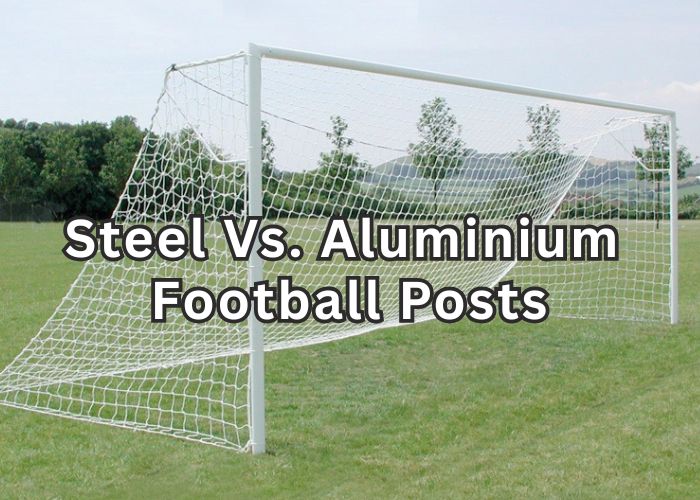
What is the Difference Between Steel and Aluminium Football Goal Posts?
Steel football goal posts tend to be best for socketed structures, as they are heavy, long-lasting, and aren't likely to bend or warp.
Aluminium, while just as sturdy, is lightweight, so is better for free-standing or self-weighted football goals that get moved around.
For more details, head to our comprehensive Steel Vs. Aluminium Goal Post guide.
Are Free-Standing or Socketed Football Goal Posts Used in the Premier League?
Generally, Premier League teams and top stadiums across the UK tend to opt for socketed football goal posts due to their ability to be anchored permanently into the ground. This makes for a robust, heavy-duty target no matter the intensity of the strike.
However, free-standing goal posts are often used throughout training grounds, where goal posts are more likely to be moved or stored away.
Related Posts


Categories
Recent Posts




 RSS Feed